
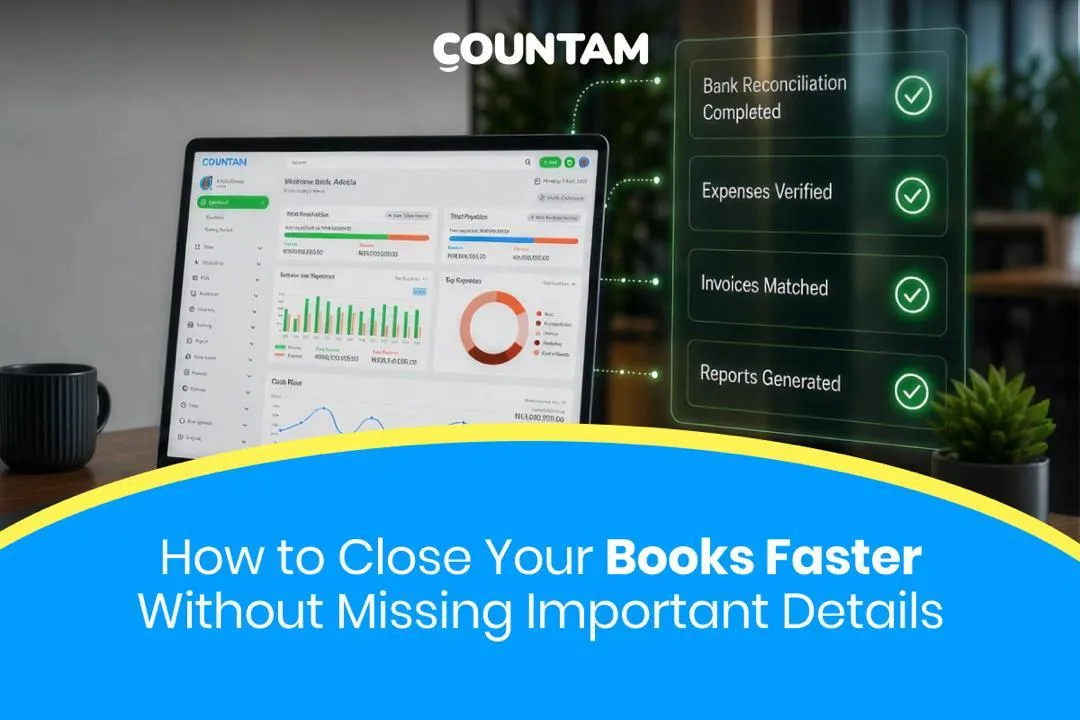
How to Close Your Books Faster Without Missing Important Details
Month-end should not begin with your accountant searching through bank alerts and different versions of the same spreadsheet.
Imagine two homeowners: Ndubuisi and Eniola.
Ndubuisi cleans once a month, after the laundry has become a huge pile, dishes are stacked in the sink and dust is visible on the floor.
Eniola cleans daily. Laundry goes straight into the wash or wardrobe, dishes are washed after every meal and the floor is swept regularly.
Two homeowners, two different approaches. Tayo spends hours cleaning, while Eniola spends only a few minutes each day.
The same principle applies when closing your books, whether monthly or annually.
The biggest reason closing your books may feel overwhelming is that everything is being done at the same time, at the last minute.
A faster month-end close begins before the month ends. What Does It Mean to Close Your Books? Closing your books means reviewing and confirming your financial records for a particular period.
Before the books is closed, your business should be able to answer:
How much of our goods did we sell and what is left?
What did we make in sales, and what did we spend?
Which customers still owe us?
Which suppliers have not been paid?
Do our records match the bank balance?
Were payroll deductions and taxes filed correctly?
The goal is to finish with numbers and insights you can trust.
Here Is How to Close Your Books Faster Without Missing Important Details
1. Record Transactions as they Happen and Keep Your Records in One Place
Do not wait until month-end to enter several weeks of transactions.
Record sales, expenses, customer payments and supplier bills as they happen. Each entry should include the date, amount, customer or supplier and a clear description.
This is known as continuous accounting. It simply means keeping your records updated regularly using an efficient accounting software instead of leaving everything until the end of the month.
When transactions are recorded daily or weekly, your accountant only needs to review them at month-end, not start from the beginning.
2. Match Your Records With Your Bank Every Week
One important accounting month-end procedure is account reconciliation.
This simply means comparing your accounting records with the money that entered and left your bank account.
Doing this weekly helps you identify:
Incorrect customer payments
Duplicate transactions
Transfers with unclear descriptions
Outstanding Payments
3. Check Inventory, Payroll and Taxes Early
Do not wait until the final day to discover that your inventory figures do not match, or a tax deduction was missed.
Before month-end, review:
Inventory received, sold, damaged or returned
Salaries, allowances and deductions
VAT, PAYE, WHT and other applicable taxes
Supplier bills and upcoming payments
A Quick Month-End Close Checklist
Before closing your books, confirm that:
All sales and expenses have been recorded
Receipts and invoices are matched correctly
Bank transactions match your records
Customer and supplier balances are accurate
Inventory, payroll and tax records are complete
Unusual transactions have been reviewed
If your team cannot confirm these without searching through several files, the process still needs work.
Take a look into Countam
These checks help prevent important details from being left out of your reports.

Start your 60-days free trial today
Countam is a Nigerian accounting software platform built for SMEs managing payroll, VAT, PAYE, WHT, and pension compliance. countam.com


